
Shopping Cart
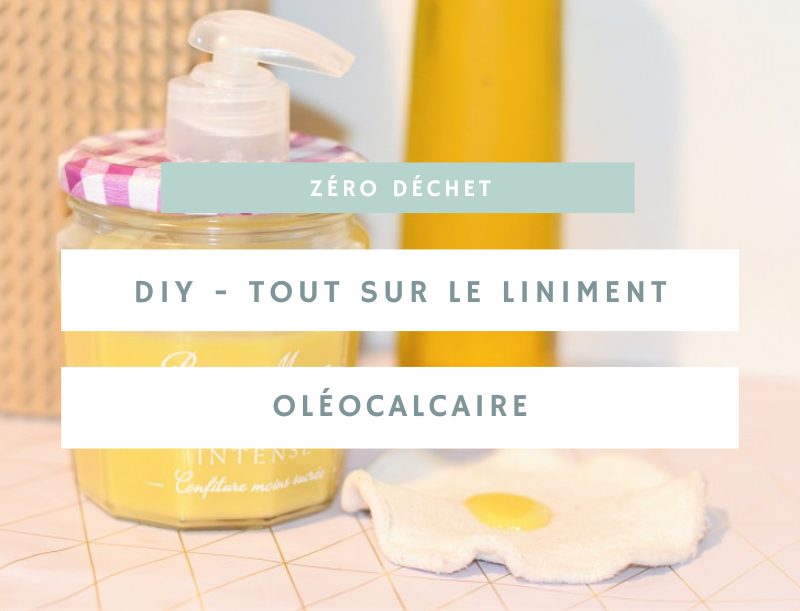
Oil-and-lime liniment: homemade or store-bought, and the mistakes that ruin it
Diaper Care & Natural DIY
Two ingredients, a recipe over a century old, a bottle found in nearly every young parent’s bathroom: oil-and-calcium liniment has become the go-to diaper rash treatment. Easy to make, economical, and free of fragrances and preservatives, it checks all the boxes for natural skincare. However, it is often used incorrectly: applied to already irritated skin, stored for too long, left on a baby’s stool, or combined with cloth diapers without taking precautions. Here's how to prepare it, choose it, store it, and—most importantly—when it's best not to use it.
Oil-and-limestone liniment: what it does, what it doesn't do
Oleo-calcareous liniment is an emulsion made up of equal parts olive oil and lime water. Its alkaline pH neutralizes the acidity of urine and stool, and its oily film protects healthy skin between diaper changes: it is a protective treatment, not a cleanser or a medication. It does not require rinsing; apply a thin layer to clean, intact skin. Homemade versions last one to two months, while unopened store-bought versions last six to twelve months.
It should not be used on an already red and raw bottom, where its alkaline pH stings and worsens the condition; nor on a fungal infection, which it perpetuates rather than treating; nor on the face or hands. With cloth diapers, apply only a small amount and wipe off any excess; otherwise, the oily film will clog the inserts and cause the diaper to leak. Any liniment that smells rancid, has changed color, or no longer mixes properly should be discarded.
Key Takeaways
The liniment protects healthy skin; it does not clean away stool and does not treat existing irritation.
The basic recipe is simple: half olive oil, half pharmacy-grade lime water, shaken before each use.
If homemade, it will keep for one to two months when stored away from light; a rancid smell is a sign that it's time to throw it away.
If there is bright red erythema, oozing skin, or a fungal infection, stop using the liniment and seek medical advice.
With cloth diapers, the less, the better: apply a thin layer, wipe off the excess, or use a damp wipe instead.
How does the oil-and-lime liniment work ?
The formula consists of two complementary ingredients. Lime water, a calcium hydroxide solution, is alkaline: its high pH neutralizes the acidity of urine and stool, the main cause of diaper rash. Olive oil, on the other hand, forms an oily film that limits direct contact between the skin and moisture from the diaper until the next diaper change. When vigorously mixed, the two form a creamy, white-to-pale-yellow emulsion that spreads easily.
This mechanism of action explains two things that are often misunderstood. First, the liniment does not need to be rinsed off: it is precisely the film that remains on the skin that provides protection. Second, it has no cleansing properties. It removes a small amount of dirt through the mechanical action of the cotton, but it is no substitute for washing with water after a bowel movement. Leaving fecal residue under a layer of liniment traps the irritant against the skin.
Its formula—free of free water, fragrance, and preservatives—makes it well tolerated by most babies, including newborns. This also explains its popularity in maternity wards and among advocates of natural skincare. But simple doesn’t mean harmless: its alkaline pH, which is beneficial for healthy skin, becomes a drawback for damaged skin.
It protects
A protective lipid layer and a basic pH: healthy skin remains protected from the acidity of urine between diaper changes.
It doesn't clean
After a ride, clean the horse with water first. Then apply the liniment to clean, dry skin.
It doesn't work
If it stings or makes the bright red, raw, or oozing rash worse, stop using it and seek advice.
It expires
Olive oil goes rancid. It develops a strong odor, the color changes, and the layers no longer mix: it's time to throw it out.
Making Your Own Liniment: The Recipe and Its Limitations
The traditional recipe calls for equal parts: 100 ml of extra virgin olive oil and 100 ml of lime water, poured into an opaque bottle and shaken vigorously for one minute. This produces a fluid emulsion that separates when left to stand and mixes back together each time it is used. For a creamier, more stable texture, melt 2 to 3 grams of beeswax in the oil gently heated in a double boiler, then whisk in the warm lime water. The liniment thickens as it cools and separates much less.
Three precautions are essential to ensure a reliable result. The lime water must come from a pharmacy and have a verified concentration: homemade lime water or lime water of unknown quality will not have the correct pH. The olive oil must be extra virgin and fresh, ideally from a newly opened bottle, because oil that has already oxidized will result in a liniment that goes rancid within a few weeks. Finally, the equipment must be clean and dry, and only small quantities should be prepared—enough for one month’s use at most. Do not add essential oils, which are unsuitable for infants, or floral water, which introduces free water and thus poses a risk of contamination.
Home or business: which should you choose ?
The advantage of homemade liniment is its low cost and the ability to control the ingredients. Its disadvantages include limited stability, a runny texture that drips, and a short shelf life. Store-bought liniments, particularly those formulated with a natural stabilizer like beeswax, offer a consistent texture, a shelf life of several months, and a controlled formulation—which matters when the product is used five to seven times a day. For occasional use or a family comfortable with DIY, the homemade version works very well. For daily use over several months—especially at daycare or at the nanny’s—a store-bought version with a good formulation helps avoid unpleasant surprises.
Storage and Rancidity: The Unmistakable Signs
The weak point of the liniment is the oil. Olive oil oxidizes when exposed to light, heat, and air, and this oxidation produces a characteristic rancid odor—slightly pungent—that is very different from the mild scent of the fresh product. A rancid liniment loses its effectiveness and can cause irritation. The rule is simple: a homemade bottle should be stored for one to two months in an opaque container, protected from light and away from heat sources, and the date of preparation should be noted on the label. A sealed store-bought version lasts six to twelve months, depending on the manufacturer; once opened, follow the expiration date indicated on the packaging.
There are three signs that indicate you should throw the bottle away: a rancid or sour smell, a color that turns dark yellow or brown, and phases that no longer mix after shaking, or that form clumps. It’s normal for a liniment to separate when left to stand: just give it a shake. Another common mistake is leaving the bottle open on the changing table, exposed to light and air: always close it tightly, and opt for a pump bottle or a small size that you replace often rather than a large container that’s been open for months.
When should liniment not be used ?
This is the most important part—and the least well-known. Liniment is a preventive treatment for healthy skin. As soon as the skin in the diaper area becomes damaged, its alkaline pH and natural oil barrier work against it. On established diaper rash—bright red, hot, raw, or oozing—the liniment stings upon application and traps moisture instead of allowing the skin to breathe. Stop using it, clean the area with lukewarm water, pat it dry thoroughly, let the diaper area air out as much as possible, and ask your pharmacist or doctor for advice; they will recommend a suitable barrier cream.
Fungal infection of the buttocks is the most difficult to diagnose, because at first it resembles classic erythema. It is characterized by shiny red patches with well-defined edges, often in skin folds, surrounded by small satellite pimples. Liniment has no effect against the fungus, and its oily film promotes the maceration that the fungus feeds on: when used on a fungal infection, it makes the condition worse. A rash that does not improve within two or three days, that spreads, or that exhibits these signs warrants a doctor’s visit, as a fungal infection requires treatment with a prescription antifungal medication.
Finally, the liniment should be used only on the buttocks. On the face, it is too oily, and its pH is not suitable for the delicate skin of the cheeks; for cradle cap, use vegetable oil alone; on a baby’s hands—which the baby puts in their mouth—simply avoid using it altogether. Allergies to olive oil are rare but do occur: if redness appears consistently after application—even on healthy skin—you should stop using it and consult a healthcare professional.
Liniment and cloth diapers : the duo that calls for restraint
This is the mistake that almost all families make when they switch to cloth diapers. The oily film from the liniment doesn't stay on the skin—some of it ends up on the diaper insert with every diaper change. Wash after wash, this oil clogs the absorbent fibers, especially the bamboo and microfiber, and the diaper starts to leak even though it's clean. This is one of the main causes of buildup, even more so than detergent.
There are three ways to preserve the liniment without compromising absorption. Apply a minimal amount in a thin layer, and wipe off any excess with a dry wipe before securing the diaper. Use a liners between the skin and the diaper insert, which absorbs some of the oil. Or save the liniment for times when the skin really needs it, and clean the rest of the time with plain water and a washable wipe, which is more than enough for healthy skin. If the diapers If they're already leaking, a deep clean will restore the inserts to like-new condition; to choose models that hold up well to this type of care, our range of cloth diapers describes the composition of each insert.
Our Selection
Gentle Organic 3-in-1 Diaper Change Lotion, 200 ml
A short, stable, certified organic, ready-to-use formula for daily cleaning, protecting, and soothing a baby’s bottom—with no preservatives to worry about.
Checklist for Proper Use of a Liniment
Wash with water after a bowel movement, dry, then apply a thin layer of liniment
Shake the bottle before each use and close it immediately afterward
Write the date of manufacture on a homemade liniment and discard it after one to two months
Smell it before applying: if it smells rancid, throw it away
Stop as soon as the rash is bright red, raw, or oozing, and seek advice
Never use it on a fungal infection, the face, or the hands
With cloth diapers, wipe off the excess, or use water and a wipe instead
FAQ
Should you rinse off the oil-and-lime liniment ?
No. The film that remains on the skin is precisely what protects it until the next diaper change. However, it should be applied to skin that has already been cleaned with water and dried—never directly onto stool residue.
How long does a homemade liniment last ?
Store for one to two months in an opaque bottle, away from light and heat. After that, or as soon as the smell becomes rancid, throw it away. Making small batches is still the best way to ensure freshness.
Can liniment make diaper rash worse ?
Yes, on skin that’s already damaged. Its alkaline pH stings on raw skin, and its oily film traps moisture on a weeping rash or a fungal infection. It’s intended for preventive use on healthy skin; if irritation has already set in, seek advice.
A Final Word
Oleo-calcareous liniment lives up to its reputation, provided it is used properly: as a protective treatment for healthy skin, applied in a thin layer to a clean area, left on for only a short time, and discontinued as soon as the skin is damaged. Whether homemade or store-bought, the difference lies mainly in stability and shelf life; as for its use, the same rules apply.
At Maman et Bébé Nature, we love quick remedies and simple steps. A good liniment, a wet wipe, and a little fresh air on baby’s bottom often work better than any complicated cream.
This article is for informational purposes only and is not a substitute for medical or pharmaceutical advice. Oleo-calcareous liniment is a preventive treatment intended for use on healthy skin in the diaper area. If redness persists for more than two or three days, spreads, oozes, or if you suspect a fungal infection, consult your doctor or pharmacist.
Leave your reply Cancel Reply