
Shopping Cart
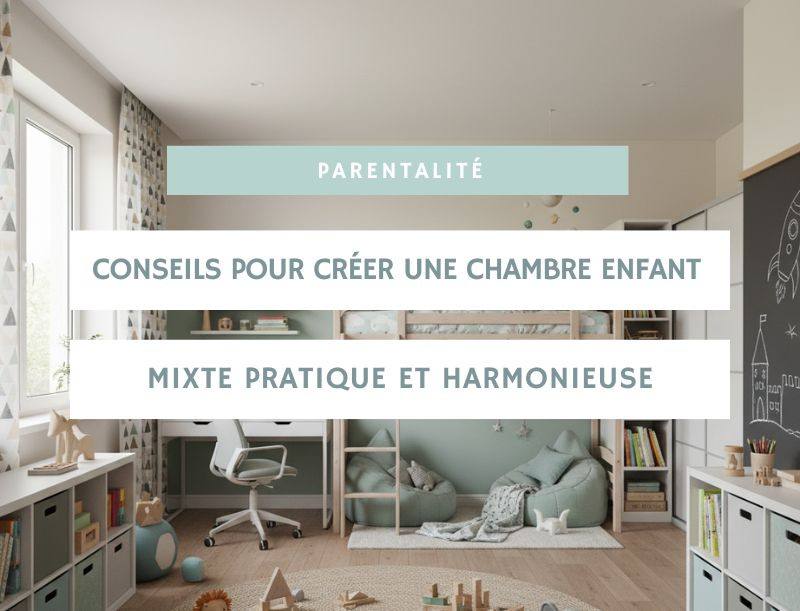
Tips for creating a practical and harmonious gender-neutral children's bedroom
Furnishing a gender-neutral children's bedroom is above all about finding the perfect balance between functionality, aesthetics, and harmonious cohabitation. It means creating a versatile, cosy nest — durable and welcoming — that is ideal for children of different genders or ages. In this shared space, every choice of bedding, children's furniture, or children's bedroom décor matters in order to guarantee day-to-day comfort, safety, and practicality.
The essential foundations for a successful gender-neutral children's bedroom
A bedroom designed for two children presents certain challenges but can also become a wonderful playground. You need to think first about the specific needs related to sleep, children's storage, and personalisation of the space, whilst respecting each child's tastes without falling into gendered clichés. Using neutral colours and a balanced layout helps lay the foundations for lasting harmony.
The main goal remains to encourage the children's independence and wellbeing whilst ensuring good use of the available space. With a few smart ideas, it is entirely possible to combine practicality, aesthetics, and modularity to create an environment suited to everyone.
How to choose bedding and children's furniture?
The choice of children's bed is central to the layout, as it naturally structures the flow of movement around the room and defines living zones. Opting for quality bedding contributes not only to rest but also to the longevity of the adaptable bedroom.
An adaptable or bunk bed model saves space whilst offering a genuine solution for accommodating several children. To find inspiration and discover the right bed for each stage of growth, you can browse different options within a children's bed collection designed to meet the needs of all ages.
When it comes to children's furniture, the ideal approach is to opt for multifunctional pieces: drawers under the bed for storing children's bed linen, modular chests of drawers, or low shelves accessible to younger children. This encourages independence from an early age and makes daily children's tidying easier. For a layout that combines comfort and practicality, it can be worth looking at ideas on suitable children's furniture.
What safety criteria should be considered?
We immediately think of child safety whenever furniture or beds are involved in a shared bedroom. A sturdy frame, appropriate guard rails on trundle or bunk models, and non-toxic materials are all essentials. The sturdiness of fixings — particularly for bunk beds — also deserves careful attention.
Accessibility should not be overlooked: avoiding sharp corners, choosing smooth finishes, incorporating ergonomic handles… All these details maximise safety, especially if the bedroom accommodates both a baby or toddler and an older child. Furthermore, to design a room that respects the environment, it is worth finding out about how to create an eco-friendly baby's bedroom.
How to optimise storage for two children?
With two occupants, organising children's storage quickly becomes a priority. To encourage tidiness, make use of renewable cubbies, stackable boxes, and wardrobes divided into zones. This strategy also allows each child to have their own personal space, fostering the development of independence.
A low unit, easily accessible, encourages children to put away their own toys and clothes. Soft baskets, small fabric chests, or compartmentalised modules are ideal for sorting day-to-day belongings. Adding wall hooks at their height allows them to hang rucksacks, jackets, or accessories.
Adaptable or bunk bed to make the most of the space
Cubbies and boxes to sort toys and school supplies
Open/closed storage (wardrobe, chest of drawers, wheeled tubs)
Soft baskets that are easy to handle
Decoration and colours: creating a gender-neutral, timeless atmosphere
Decorating a children's bedroom calls for creativity, especially when catering for several different tastes. Neutral colours such as off-white, pearl grey, or beige are excellent allies: they visually enlarge the space whilst providing a blank canvas that lends itself to personalisation through textiles and decorative objects.
To bring warmth and cosiness, add a few splashes of colour via children's bed linen, curtains, or cushions. Geometric, animal, or star-themed patterns appeal to both girls and boys and help maintain a timeless style that suits all ages.
How to personalise without overloading?
Every child loves to find their own markers even in a shared bedroom. Consider allocating part of a shelf or a section of wall for displaying drawings, photos, or personal mementoes. Small rugs of different colours in front of each bed, or personalised stickers on wardrobe doors, can be enough to individualise the space without upsetting the overall balance.
The key lies in decorative minimalism: a few carefully chosen elements are worth far more than an excess of accessories. Adaptable lighting, such as a portable nightlight or LED fairy lights, also contributes to the atmosphere whilst remaining functional for each child.
Layout ideas for a complete and adaptable bedroom
A clever layout makes the bedroom adaptable to the different stages of life. Plan for transformable furniture such as a compact desk that can be extended, a reversible bed, or fold-away storage units. These will accompany your children through changing interests and growth spurts.
Setting aside a reading corner with lightweight poufs or a hanging hammock invites relaxation and stimulates the desire to share. A multifunctional low table at the centre of the room transforms the space into a shared play area where exchange and creativity are encouraged, even in modest-sized rooms.
| Element | Advantages | Usage idea |
|---|---|---|
| Adaptable bed | Grows with the child, economical long-term | Baby to teen, easy to adapt |
| Storage accessories | Maintains order, encourages independence | Baskets, boxes, wall hooks |
| Neutral textiles | Timeless style, easy to accessorise | Bed linen, curtains, cushions |
Frequently asked questions about gender-neutral children's bedrooms
Which colour should I choose for a gender-neutral children's bedroom?
Neutral colours such as white, light grey, taupe, or beige provide an ideal base that is flexible and bright. You can add small splashes of colour with children's bed linen, cushions, or a few decorative objects to liven things up without making the room feel heavy.
Pastel tones: softness and restraint
Bold accents as finishing touches: mustard yellow, teal, sage green
Mixed patterns: stars, stripes, geometric shapes
How do you ensure child safety with multifunctional furniture?
Choosing children's furniture with rounded corners, that is stable and made from certified materials, minimises the risk of accidents. It is important to check for anti-tipping mechanisms and use reinforced fixings on tall pieces such as wall shelves or bunk beds.
Secure locks for drawers
Anti-slip pads under the feet
Height appropriate for the children's age
Which storage solutions are best for an adaptable bedroom?
Using adaptable modules such as moveable tubs, a wardrobe with adjustable shelves, or wheeled chests makes it possible to respond to children's evolving needs. This approach maintains order whilst leaving the freedom to reorganise the space over time.
Wall shelves to save floor space
Labelled sorting boxes/crates
Wardrobes divided into individual zones
| Type of storage | Practical use |
|---|---|
| Fabric baskets | Laundry, soft toys, light toys |
| Plastic tubs | Lego, toy cars, puzzles |
| Compartmentalised wardrobe | Clothes, bed linen, school books |
Should you invest in a complete bedroom set or put it together yourself?
Putting together your own adaptable bedroom offers appreciable flexibility. It allows you to tailor each element to your children's preferences and the layout of the room. Complete bedroom sets, however, provide overall cohesion and save time when furnishing.
Bespoke bedroom: maximum personalisation
Complete set: visual harmony, simplicity