
Shopping Cart
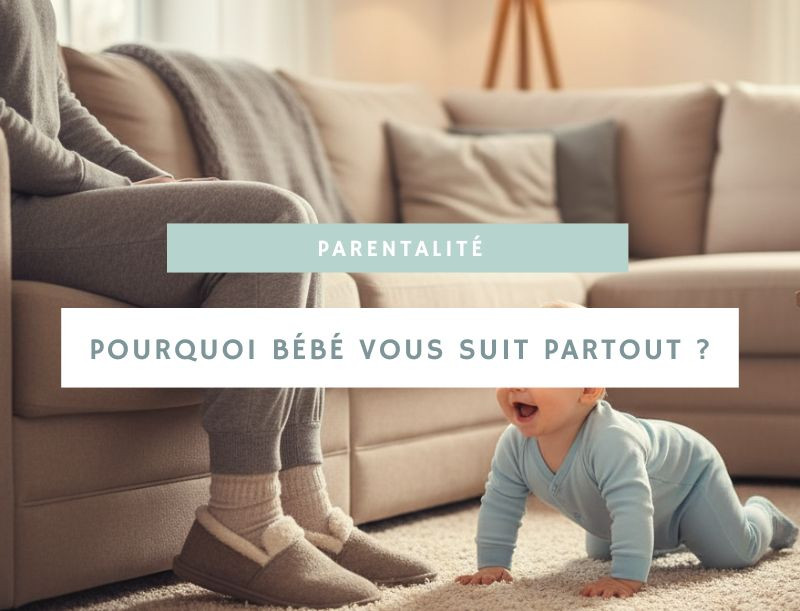
Why your baby follows you everywhere: understanding clingy behaviour in young children
It is not uncommon to notice that your baby follows you everywhere, into every corner of the house, never wanting to lose sight of their attachment figure. This behaviour can prompt both tenderness and, at times, a touch of exhaustion, but it makes complete sense within the context of a child's emotional development.
This well-known phase, during which your little one becomes truly clingy, is above all a wonderful sign of a healthy attachment and a constant search for security on the part of your small child.
What reasons explain why a baby follows you everywhere?
Seeing your child constantly seeking closeness with their parents, or struggling to play alone, is a common concern. Yet this need for closeness and this attachment need are part of the natural progression of a young child's development.
To better understand this phenomenon, it can be helpful to explore the principles of proximal parenting, which highlights the benefits of close parent-baby contact.
Beyond the simple desire to discover the world or to imitate adults, following their parent corresponds above all to an instinctive mechanism designed to reassure the child in the face of new experiences. It is a key stage in building the attachment bond, an essential element for emotional balance.
The role of the attachment bond
When a baby goes through a truly clingy phase, it is in reality the living expression of their attachment bond towards you. The child then shows a need for attention, physical contact and reassurance. These behaviours reinforce the trust between the two of you and lay the foundations for a solid future autonomy.
Among the most notable signs of this process are the baby's immediate reaction when they can no longer see you, their tendency to crawl or walk towards you even when you are right beside them, or their persistent desire to be carried.
All these gestures illustrate this search for physical contact and attention that nourishes the parent-child relationship.
Separation anxiety and the search for security
From around eight months, many babies go through the phase known as separation anxiety. At this stage, they understand that you exist independently of them. As a result, they multiply their strategies to maintain contact, such as following you into every room or crying the moment you disappear from their field of vision.
An interesting dimension of this development appears when the child gradually begins to dissociate and assert their individuality, particularly at the stage when a baby begins to say "I". To explore this decisive moment further, discover how the birth of the self in children unfolds.
This reflex reflects a deep search for security. When the primary attachment figure moves away, the child experiences considerable emotional discomfort. Their return immediately soothes this tension, explaining the well-known clingy behaviour observed in so many young children.
How should you respond to a clingy baby?
When a baby constantly seeks closeness, it can make daily life demanding, especially when a thousand tasks are waiting. Understanding what lies behind this need already helps to avoid worrying unnecessarily.
In reality, this behaviour reveals a balanced emotional development: far from being a sign of problematic dependence, it shows that your child is using the quality of your attachment bond to gradually explore their environment, but only when they know that you remain available to offer support and encouragement.
Nurturing emotional security day to day
Establishing routines reassures most families, as they meet the child's attachment need. Setting aside a few minutes each day for shared games, cuddles or simply narrating your comings and goings ("I'm going to the kitchen, I'll be back in a moment") gives your baby stable reference points. Communication remains a precious tool for accompanying this stage of emotional development.
Encouraging the search for physical contact through gentle gestures helps to soothe the child and gradually fosters their access to autonomy.
You can also introduce moments where separation happens gently, for example when your baby stays in their playpen while you tidy an adjoining room. This shows them that even when you are briefly absent, you remain accessible and attentive to their needs.
Preparing your child for separation
Simple games such as peekaboo help children to become comfortable with the idea of temporary absence. Arranging short moments where your baby stays with another trusted person (a grandparent, a childminder) also gradually accustoms them to accepting other reassuring presences and to managing distance.
Here are a few practical tips that are useful during these sensitive periods:
Name your movements to reduce separation anxiety: "I'm going to the bathroom, you stay here with your teddy."
Introduce a transitional object such as a soft toy or a scarf carrying your scent.
Favour brief and gradual separations in order to build trust.
Celebrate positive reunions when you return to your baby.
Why is this behaviour beneficial for emotional development?
Many parents worry that being followed everywhere might undermine their child's independence. In reality, this clingy behaviour lays the solid foundations of self-esteem. A secure attachment enables the child to explore their environment more freely thereafter, knowing they can return to their comfort zone whenever they need to.
This phase therefore represents a transitional stage, the intensity of which varies from child to child. The more your child feels heard and understood in their need for closeness, the more lasting confidence they develop. Their need for attention thus receives an appropriate response, which limits the risks of later insecurity and encourages the blossoming of their personality.
| Approximate age | Typical behaviours | Benefits for the child |
|---|---|---|
| 6 to 12 months | Crying at separations, need to be in the same room | Strengthening of the attachment bond, sense of security |
| 12 to 24 months | Accompanied exploration, frequent returns to the parent | Development of autonomy and confidence |
| After 24 months | Seeking presence during changes or tired moments | Gradual management of emotions and independence |
Answers to frequently asked questions about the clingy baby
At what age does the behaviour of following you everywhere appear?
The tendency to follow you everywhere generally begins around eight to nine months, a period marked by sufficient motor development and the onset of the well-known separation anxiety. The duration of this phase varies from child to child but often coincides with the mastering of sitting or crawling.
In some cases, this behaviour can last until the age of two or three, and resurface during significant moments such as tiredness, a change in childcare arrangements or the arrival of a new family member.
Does this behaviour prevent my child from becoming independent?
On the contrary, responding to the attachment need in early childhood fosters future detachment. A well-established emotional security encourages the child to build confidence and dare to explore further afield as soon as they feel ready.
Greater confidence during future explorations
Overall reduction in excessive reassurance-seeking in the long term
Should you encourage your baby to stay alone or accompany them in their needs?
A fair balance between accompaniment and respect for the need for solitude is preferable. Your baby will develop their initiative if they feel supported in their search for physical contact, whilst gradually discovering the pleasure of playing alone, even for short periods.
Accept moments of great closeness
Ritualise certain separations to better manage distance
Build up free play time in line with their own pace
When should you be concerned about clingy behaviour?
Most babies naturally go through this clingy phase. However, if this behaviour persists very intensely, worsens over time or causes great distress despite all your efforts, it may be worth consulting a professional.
Extra vigilance is warranted if the child refuses any form of separation or shows marked distress linked to nursery, school or certain specific family events. An outside perspective can then help to assess the situation calmly and provide the necessary support.