
Shopping Cart
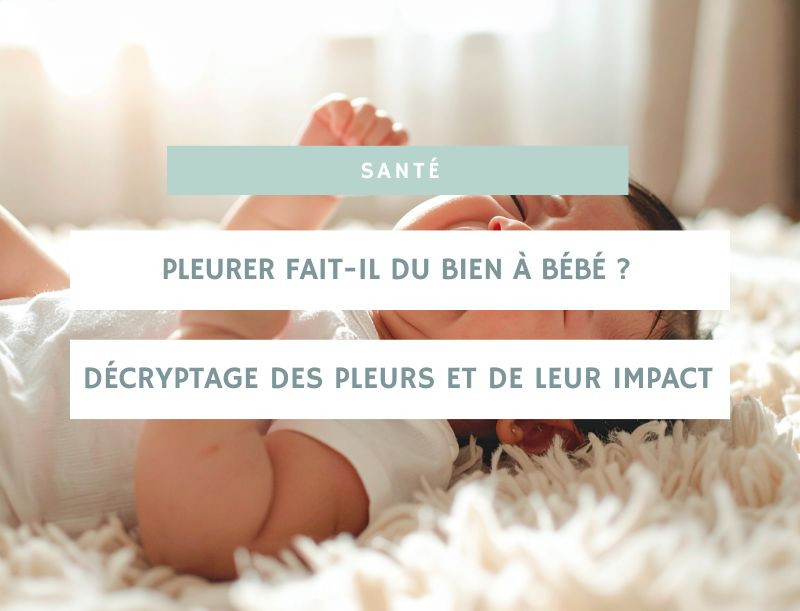
Is crying good for babies? Decoding tears and their impact
When a newborn starts to cry, many parents ask themselves: are a baby's tears beneficial, or should they always be soothed immediately? It can be difficult to know how to react to these episodes, which are often baffling. Decoding this communication through crying helps to see things more clearly and to respond as well as possible to a little one's needs. Let us look at the controversial topic of leaving a baby to cry and explore together what really lies behind a baby's tears.
What a baby's crying means
A baby's crying is their very first way of making contact with the world around them. Long before speech, they use their voice to signal that they are hungry, cold, experiencing physical discomfort or illness, or simply have a need for comfort. It is their primary means of signalling an uncomfortable situation, ranging from an irritating nappy to a big, unexplained bout of distress.
Distinguishing between the different causes of crying is not always straightforward at first. Some babies express themselves very loudly whilst others remain quietly fretful. Interpreting this call correctly can prevent many misunderstandings and reduce stress for both baby and parents.
Leaving a baby to cry: good or bad idea?
Faced with the infamous colic or night-time wakings, some adults still suggest leaving a baby to cry so they learn to become more independent. This approach divides health professionals and families alike. The idea is based on the belief that soothing a child quickly prevents them from learning self-soothing in the long run — but what is the reality of this approach?
On the other hand, some insist on the importance of soothing a baby as quickly as possible. They highlight the need for comfort as essential for building emotional security and limiting any sense of abandonment. Responding to crying is therefore seen as beneficial for a baby's emotional development.
What arguments support leaving a baby to cry?
Among those who advocate leaving a baby to cry, the main argument rests on the belief that the child would eventually understand that this mode of expression is no longer necessary to get what they need. Gradually, they might extend the time between two night-time calls, for example, thus encouraging a degree of autonomous emotional management.
Nevertheless, no study confirms that failing to respond to crying genuinely develops independence in newborns. The risk of raising stress levels in the baby remains, especially if their calls go unanswered for a prolonged period. The consequences for their trust in those close to them may also be questioned, particularly in cases where a sense of abandonment develops.
Why soothe a baby quickly?
The choice to console a child quickly rests primarily on the recognition of their fundamental needs. By intervening when the baby calls out, you limit the rise in cortisol levels, which is responsible for stress in the baby and potentially harmful if it remains elevated for a long time.
Certain episodes of crying, such as the well-known moments when intensity increases at the start of the evening, are known as evening crying in babies: they can often be soothed through carrying techniques, gentle singing, or appropriate bedtime rituals.
An attentive and reassuring attitude also fosters the child's sense of security. They learn that their emotions are heard, which encourages better emotional regulation as they grow.
Common causes of crying and practical solutions
To see things more clearly, it sometimes helps to take a practical look at what drives a little one to cry. Sometimes the reasons seem obvious; at other times they remain mysterious despite every effort made to decode the baby's crying.
Hunger: an empty tummy remains the number one reason, especially during the first weeks of life.
Physical discomfort or illness: unusual fever, teething, a dirty nappy, gastro-oesophageal reflux, and so on.
The need for comfort: loneliness, a change of environment, overstimulation, or the desire for a cuddle after a little fright.
Tiredness: some babies cope poorly with too little or too much sleep and express their exhaustion through crying.
Decoding crying requires observation and sometimes a good degree of deduction. Trying several solutions for soothing a baby one after another can often calm the child without dramatising the situation, whilst keeping in mind that every child develops differently.
The link between crying and emotional development
Over the months, communication through crying gradually gives way to other forms of expression. Smiles appear, then babbling, showing that the baby is progressively developing a broader range of ways to connect with those around them. Supporting a baby in their distress and responding to their crying thus lays the foundations of essential trust, which is conducive to future emotional flourishing.
Although crying is a normal and universal reaction in newborns, there are particular situations where an absence of crying or low expressiveness may raise questions — notably regarding specific conditions such as autism. To better understand the relationship between the frequency of crying and certain atypical profiles, such as babies showing signs of autism, it is possible to consult detailed resources that address the reduced reactivity to crying in some autistic children.
Responding to needs early on helps manage periods of stress and reduces the risk of repeated episodes where the child must struggle alone. Anticipating signs of hunger, physical discomfort or illness gradually transforms difficult moments into opportunities for mutual learning between parent and child.
Summary table of the main causes of a baby's crying
| Common cause | Associated sign | Recommended action |
|---|---|---|
| Hunger | Mouth open, rooting for breast/dummy | Offer an appropriate feed |
| Physical discomfort or illness | Writhing, unusual whimpering | Check temperature, seek advice if in doubt |
| Need for comfort | Sudden crying, high-pitched screams, clinging to arms | Pick up and rock gently |
| Tiredness | Red eyes, yawning, difficulty settling | Soothing bedtime routine, calm environment and low lighting |
Common questions about a baby's crying and how to manage it
When should you be concerned about a baby's crying?
If a baby's crying suddenly becomes intense, lasts several hours for no apparent reason, or is accompanied by fever, refusal to feed, or unusual drowsiness, medical advice is essential. These signs may point to a medical cause or an underlying physical discomfort or illness. It is always better to seek a consultation to rule out an immediate health problem.
Inconsolable crying despite all attempts
Changes in general condition (few reactions, reduced muscle tone)
Associated symptoms such as persistent vomiting or diarrhoea
How do you interpret different types of crying in a baby?
Variations in the pitch, intensity, or rhythm of crying often provide valuable clues about their origin. A high-pitched scream may signal pain, whilst prolonged whimpering may indicate tiredness or listlessness. Observing the context, the way the crying develops, and the baby's gestures helps to decode their meaning.
Crying accompanied by jerky movements: physical discomfort
Regular crying in the evening: possible sensory overload
Weak, plaintive crying: sign of discomfort or tiredness
Are there effective methods for soothing a baby when they are crying?
Yes, several techniques can help to soothe a baby when they are crying. Rocking them gently, wrapping them in a light blanket, or humming a lullaby are among the recognised gestures. Establishing a consistent bedtime routine often reassures the newborn and reduces the frequency of crying linked to tiredness or emotional insecurity.
Pick the child up for reassuring physical contact
Turn on a soft light, limit loud noises
Seek advice if you are unsure about the cause of the crying
Is crying inevitable in all babies?
Yes, all newborns go through phases where crying dominates communication. This natural stage is perfectly normal as long as the baby regularly settles back down. With time, children develop other, quieter modes of communication. Patience and kindness are your best allies for getting through this period with peace of mind.
| Baby's age | Average daily crying duration |
|---|---|
| 0 to 3 months | 1 to 3 hours |
| 3 to 6 months | 20 minutes to 1 hour |