
Shopping Cart
Outdoor toys for kids: how to choose by age
Early learning & outdoor play
A garden, a patio or even the living room can become a wonderful playground, as long as you have the right equipment. With so many products on offer, it is not always easy to know what to buy, or at what age. Yet a successful toy is less a question of price than of timing: it is the one that arrives just when the child is ready to make the most of it.
Outdoor play: what changes with your child's age
Before age three, children explore with their hands and their bodies: stacking and nesting toys, along with water and sand play, build motor skills and coordination. Between three and six, imagination takes over, with play kitchens, pretend play, dress-up and small building projects. From six or seven, children look for a challenge: complex construction sets, board games, science or sports activities that call for strategy and patience.
When it comes to setting up, three things matter as much as the toy itself: the space actually available, inside and all around the structure, flat and stable ground, and the safety clearances given by the manufacturer. A structure placed away from dead branches and visible from the patio or a window solves most supervision problems.
Key points
A successful toy arrives at the right moment: go by your child's actual age, not the age they will be next year.
Before three, body and hands come first. After three, it is imagination. After six, the challenge.
A playhouse is chosen on three criteria: the material, the available space and the built-in features.
Play structures need flat, stable ground and the safety clearances set by the manufacturer.
A direct view from the patio or a window beats an isolated corner of the garden.
Which outdoor toy for your child's age?
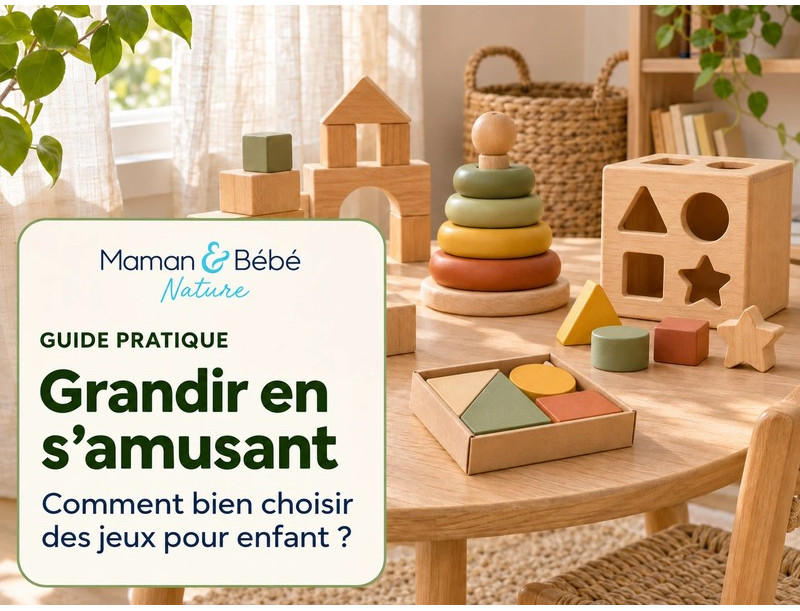
A successful toy is one that arrives at the right moment. Before age three, children explore with their hands and their bodies. To develop their motor skills and coordination, you can favor stacking and nesting toys, as well as water and sand play.
Between three and six, imagination takes over. Little hands turn to play kitchens, pretend play, dress-up and small building projects. It is the ideal time to make up stories while playing, or to learn to play with others.
From six or seven, children look for more of a challenge: feel free to give them complex construction sets, board games, or science and sports activities that call for strategy or patience. Toys and Garden sorts its toys by age group, which saves you time and helps you avoid buying something unsuitable. You can then support your child at the pace of their progress, without frustrating them or putting them in difficulty.
For the youngest, those not yet old enough to enjoy a garden play structure, the logic is exactly the same: start from what the child can already do rather than what they will soon be able to do. Our selection of early learning toys covers this first stage, when everything happens through grasping, mouthing and first movements.
Under 3
Stacking, nesting, playing with water and sand: motor skills and coordination above all.
Ages 3 to 6
Play kitchens, pretend play, dress-up, small building projects: imagination and playing together.
From 6 or 7
Complex construction sets, board games, science or sports activities: time for a challenge.
All ages
Flat ground, the clearances set by the manufacturer and a direct view from the house.
The garden playhouse: a little world all their own
For little ones, a playhouse is first and foremost a space of their own. In turn it becomes a family home, a restaurant, a shop, a guard post or a secret hideout. Role play stimulates imagination, language and social skills. Feel free to browse your play equipment supplier's ranges to find different playhouse models to suit your wishes and your child's preferences.
The first criterion is the material. Wood blends easily into the garden and, when well maintained, it is durable and weather resistant. Plastic is also an excellent compromise: it needs less care and appeals with its light weight and bright colors.
The second is the available space. Allow enough room inside, but also all around the playhouse, so children can move about and play in peace: the surrounding area is what people almost always underestimate when ordering.
The third concerns the features. Some playhouses come with a slide, a swing or a small built-in kitchen. That way you can choose the model that matches your child's wishes, without paying for options they will never use.
Slides and sandboxes: moving in the fresh air while learning
Outdoor equipment turns the garden into a real playground. With swings, climbing walls, trampolines or sandboxes, children can handle, build, experiment and play together. As well as working on their balance and strength, these activities encourage motor coordination and cooperation.
Whatever the type of equipment, remember to take a few precautions. Structures must be installed on flat, stable ground and must respect minimum safety clearances, which the manufacturer's instructions specify model by model. Ideally, set up your playhouse or play structure away from dead branches, with a direct view from the patio or a window of the house.
Checklist before installing outdoor play equipment
Choose according to your child's actual age, not the age they will be in a year
Measure the available space, inside the structure as well as all around it
Check that the ground is flat and stable before assembly
Respect the safety clearances given in the manufacturer's instructions
Keep the structure away from dead branches and obstacles
Keep a direct view from the patio or a window
Plan for wood maintenance if that is the material you choose
Outdoor toys for kids: your questions
Which type of outdoor toy for which age?
Before three, focus on hands-on play: stacking, nesting, playing with water and sand. From three to six, imitation and role play take over. From six or seven, children look for a challenge, with complex construction sets or sports and science activities.
Wood or plastic for a garden playhouse?
Wood blends better into the garden and lasts a long time if it is maintained regularly. Plastic needs far less care, stays light enough to move around and offers bright colors. The choice mainly depends on how much time you are willing to spend on upkeep.
How much space should you leave around a play structure?
More than you think. The classic mistake is to measure only the structure's footprint and forget the circulation area all around it. Refer to the safety clearances in the manufacturer's instructions, which vary by model and type of equipment.
Can you install outdoor play equipment on a patio or in a small space?
Yes, as long as the ground is flat and stable and the clearances set by the manufacturer are respected. In a small area, a compact piece of equipment that is properly installed is better than a large structure missing its clearance zone.
A final word
Choosing outdoor play equipment comes down to three simple questions: where is my child today, how much space do I really have, and how do I install the structure safely. The rest, material, color, built-in options, is a matter of enjoyment and is best decided together with your child.
At Maman et Bébé Nature, we prefer toys that last and support a real stage of development over equipment bought too early. A toy that arrives at the right age is a toy that gets used, year after year.