
Shopping Cart
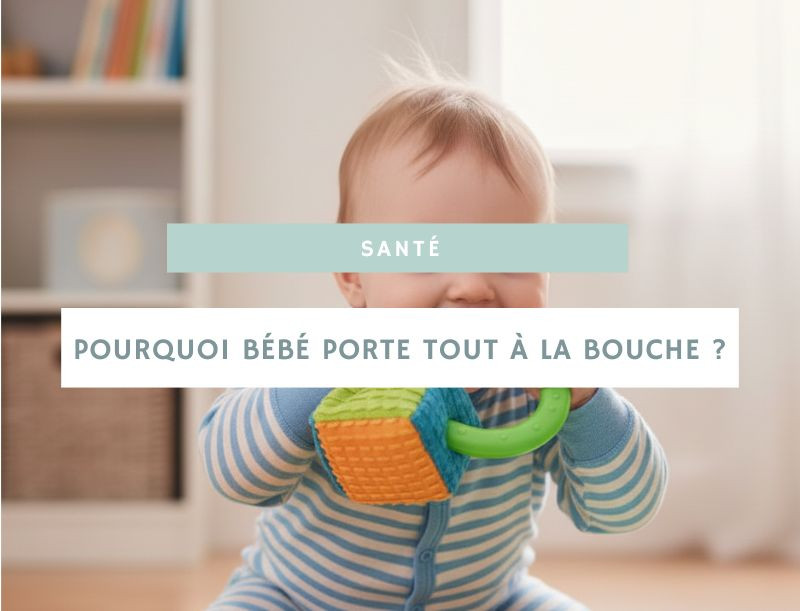
Why does baby put everything in their mouth? Understanding this fundamental reflex
The first months of a child's life never cease to fascinate, with their wealth of spontaneous gestures — including the famous reflex that drives babies to put everything in their mouth. Between worried parents and reassuring paediatricians, this habit raises a great many questions. What really lies behind this oral exploration, often viewed as strange yet oh so essential to a child's development? Let's explore together the many reasons behind this behaviour, so common in little ones, and shed light on its connection to the oral stage, the sucking reflex, and many other aspects of psychomotor development.
The sucking reflex and the oral stage in newborns
From birth, the sucking reflex is one of the newborn's automatic behaviours. This reflex plays a fundamental role in survival, as it enables the baby to feed effectively, whether at the breast or from a bottle.
Very quickly, this automatic gesture goes far beyond simple feeding and marks the entry into the oral stage, where almost everything ends up in the mouth.
During this period, the mouth becomes the primary tool for sensory exploration. The newborn uses their lips, tongue, and gums to discover their immediate environment.
This regular contact with different objects, or even with their own hands, helps to calm and reassure the baby, providing a sense of security and wellbeing through repetitive and familiar gestures.
Sucking reflex: an innate need oriented towards survival
Discovering the world through the mouth
Natural self-soothing mechanism
Sensory exploration and curiosity: discovering the world through the mouth
During their first months, a child interacts with their environment primarily through their mouth. This habit stems as much from natural curiosity as from the fact that their vision and fine motor skills are not yet fully developed.
Touching, smelling, and tasting are then intimately linked, and using the mouth to explore comes almost naturally in the discovery of the world around them.
Oral exploration in little ones is an inexhaustible source of learning for the child. By putting an object in their mouth, they discover its texture, temperature, and sometimes even its taste.
This early mode of learning allows them to accumulate varied sensory experiences, which are essential for stimulating their psychomotor development. Moreover, this act nurtures the baby's confidence in their ability to interact with the world around them.
The different stages of oral exploration
Between three and six months, the newborn experiments mainly with their own fingers or those of their parents. Gradually, they manage to grasp toys and various objects that fascinate them by their novelty. Each of these objects reveals a range of sensations that enrich their sensory repertoire.
As the child grows, they refine their perception of materials and shapes through this privileged contact with their oral cavity. Early discovery through the mouth thus accompanies the development of eye-hand coordination and contributes to strengthening finger dexterity.
Which objects does baby put in their mouth and why?
In practice, anything within reach becomes a potential candidate for this oral test: a teething ring, a comfort toy, a plastic or fabric toy, or even the corners of a piece of clothing or their thumb. This selection follows less a logic than a matter of what is available and appealing in the moment.
What adults sometimes perceive as putting "just anything" in the mouth mostly reflects a genuine thirst for discovery and new sensations. Each object offers a different response to the little one's curiosity and actively contributes to their overall learning.
The link between mouthing and psychomotor development
If putting so many objects in the mouth sometimes worries adults, this gesture has a very real purpose for the child. It is not merely a sensory quest, but also a solid support for overall psychomotor development.
This behaviour stimulates the muscles of the mouth, prepares the child for the introduction of solid foods, and encourages language. Moreover, the baby gradually learns to coordinate their movements between their hands and mouth — a key step in acquiring more complex gestures such as using cutlery or, later on, writing.
Strengthening of oral muscles (tongue, jaw, lips)
Improved hand-to-mouth coordination
Preparation for chewing and language
Soothing the gums and providing relief during teething
Between four and eight months, a new phenomenon emerges: teething. This period is often uncomfortable and painful for the newborn, who will naturally seek to relieve their gums by gnawing on anything within reach. Mouthing and gnawing therefore becomes a universal reflex for easing the discomfort associated with the appearance of the first teeth.
Many parents notice that the choice of objects put in the mouth changes during this stage: babies then favour soft objects specifically designed to massage the gums, such as teething rings. Beyond immediate relief, these gestures reinforce the child's autonomy in managing their own discomfort.
| Period | Observed oral behaviour | Benefit |
|---|---|---|
| 0 to 6 months | Sucking thumb/objects | Security, soothing |
| 6 to 12 months | Mouthing various toys | Sensory exploration, psychomotor development |
| Teething | Increased gnawing | Gum relief, managing discomfort |
Frequently asked questions about the oral reflex in babies
At what age does the oral stage begin and when does it end?
The oral stage begins at birth, guided by the sucking reflex, then intensifies during the first months of life. This phase generally reaches its peak between 6 and 12 months, when curiosity grows and motor skills allow for better manipulation of objects. This behaviour begins to diminish around 18 months, even though some children retain this habit occasionally up to the age of two or beyond.
Start: birth
Intense period: 6-12 months
Significant decrease: after 18 months
Is putting objects in the mouth dangerous for baby?
This behaviour is not dangerous in itself provided the child is in a safe environment: it is simply a matter of ensuring that the objects being explored are clean, age-appropriate, and free from detachable parts that could be swallowed. The main risks relate to ingesting unsuitable items or potential allergies depending on the materials used. Regular supervision remains the best way to accompany baby in this sensory exploration without major concern.
Adult supervision recommended
Age-appropriate certified toys
Cleanliness of objects checked
Does putting everything in the mouth influence psychomotor development?
Yes, this habit plays a positive role in the child's psychomotor development. It improves hand-to-mouth coordination, prepares for future stages of language, and encourages autonomy at mealtimes. By diversifying sensory experiences, baby develops self-confidence, curiosity, and overall motor skills.
Stimulation of fine motor skills
Development of later language skills
Refinement of sensory perception
How can I support baby during teething?
To help a child during teething, offering chilled teething rings or other suitable toys encourages gum soothing and limits irritability related to pain. It can be helpful to vary the textures and temperatures of objects offered, so as to provide additional day-to-day support.
Soft teething rings
Objects that can be refrigerated
Variety of textures for gum massage
| Tip | Benefit |
|---|---|
| Chilling the teething ring | Reduction of inflammation |
| Offering several toys | Additional stimulation |