
Shopping Cart

Weaning and food diversification
Is your baby becoming more and more interested in what's on your plate? Do they seem very eager to taste your purée and little vegetables? It may be time to start weaning!
But what exactly are we talking about? How does it work? And above all, how do you know when your baby is ready? We tell you everything right here!
Weaning and food diversification: how does it work?
A budding maturity
During your little one's first year, many changes take place. Among them, an important milestone in a baby's life: weaning.
Physiologically, the stomach and the digestive system in general reach a certain maturity that continues to progress. As a result, your little cherub is ready to consume foods other than breast milk.
Generally, a child can start eating between 4 and 6 completed months. However, we can only recommend that you consult your paediatrician to get their advice.
How do you start introducing foods?
In practical terms, you will give your baby 4 meals a day: breakfast, lunch, a snack, and dinner.
You will start with blended foods, with no lumps whatsoever. Quantities will obviously be very small. It is also advisable to begin by introducing one food at a time, over a period of 15 days.
For example:
- Carrot, for savoury meals
- Apple, for sweet meals
You can then offer other fruits and vegetables in stages, such as: parsnip, banana, pumpkin, green beans, pear, peach...
It is important to respect your baby's pace and never force them when they refuse food!
And what about breastfeeding in all of this?
It is also worth knowing that breastfeeding can of course continue on demand, even once your baby starts eating like a big one!
Why practise food diversification?
It is important to bear in mind that the beginning of introducing foods for babies is more of an awakening phase than a nutritional need — especially when your baby is under 6 months.
As such, it is important to start gently and to introduce new foods gradually.
This will help reduce possible allergy risks, whilst also awakening your baby to flavours, colours, and textures.
What about Baby-Led Weaning (BLW)?
When discussing the introduction of foods, some people look into BLW, otherwise known as: Baby-Led Weaning.
Feel free to read our blog post on the subject.
Signs that your baby is ready for food diversification:
It is crucial to listen to the signals your baby is sending you to know when to start introducing solid foods. Every child is unique, but certain signs can indicate they are ready to discover new flavours.
1. Baby holds their head up and sits with minimal support:
One of the first signs of readiness is your baby's ability to hold their head upright and sit, even with slight support. This skill is essential for safe feeding, as it reduces the risk of choking.
2. Interest in food:
If your baby starts showing a keen interest in what you are eating, tries to grab your food, or follows your movements with their eyes as you eat, this is a good indicator that they are ready to try something new.
3. The decrease of the tongue-thrust reflex:
This natural reflex, where your baby pushes food out of their mouth with their tongue, begins to fade at around 4 to 6 months. When this reflex diminishes, it is a sign that your baby can handle solid foods more easily.
The first steps of weaning: foods to prioritise
When introducing the first foods, it is recommended to begin with gentle, easy-to-digest fruits and vegetables. Opt for vegetables such as carrots, courgettes, or parsnips, which have a smooth texture once blended. For fruits, apple, pear, and banana are excellent choices. These foods are not only nutritious, but they also allow your baby to gradually get used to new textures and flavours.
1. Introduce vegetables first:
Starting with vegetables is often advised to prevent your baby from developing a preference for sweet foods. You can offer a different vegetable each day, whilst observing your baby's reactions.
2. Gradually broaden the diet:
After introducing the first vegetables and fruits, you can diversify further by offering blended vegetable combinations or introducing cereals such as rice or oats, always in the form of a smooth purée.
Mistakes to avoid during food diversification
Food diversification is a learning phase for your baby, but also for parents. It is important to avoid certain common mistakes that could harm your baby's experience.
1. Forcing your baby to eat:
If your baby refuses a food, it is crucial not to insist. Forcing a child to eat can create negative associations with food. Instead, try reintroducing that food after a few days.
2. Introducing too many foods at once:
To detect any potential allergies, it is recommended to introduce one new food at a time, allowing around 3 days between each new introduction. This allows you to monitor your baby's reactions and quickly identify any problematic food.
3. Worrying about quantities:
At the start of weaning, your baby will only consume small amounts. It is important to respect their appetite and not to worry if they eat little. Breast milk or formula remains the main source of nutrition during this period.
Continuing to breastfeed or bottle-feed during weaning:
Even as your baby begins to discover solid foods, breastfeeding or the bottle remains an essential part of their diet. Milk provides the nutrients your baby needs to grow and develop. Weaning is a complement that allows your baby to discover different flavours and prepares their digestive system to gradually accept a more varied diet.
Accompanying your baby through their first food discoveries:
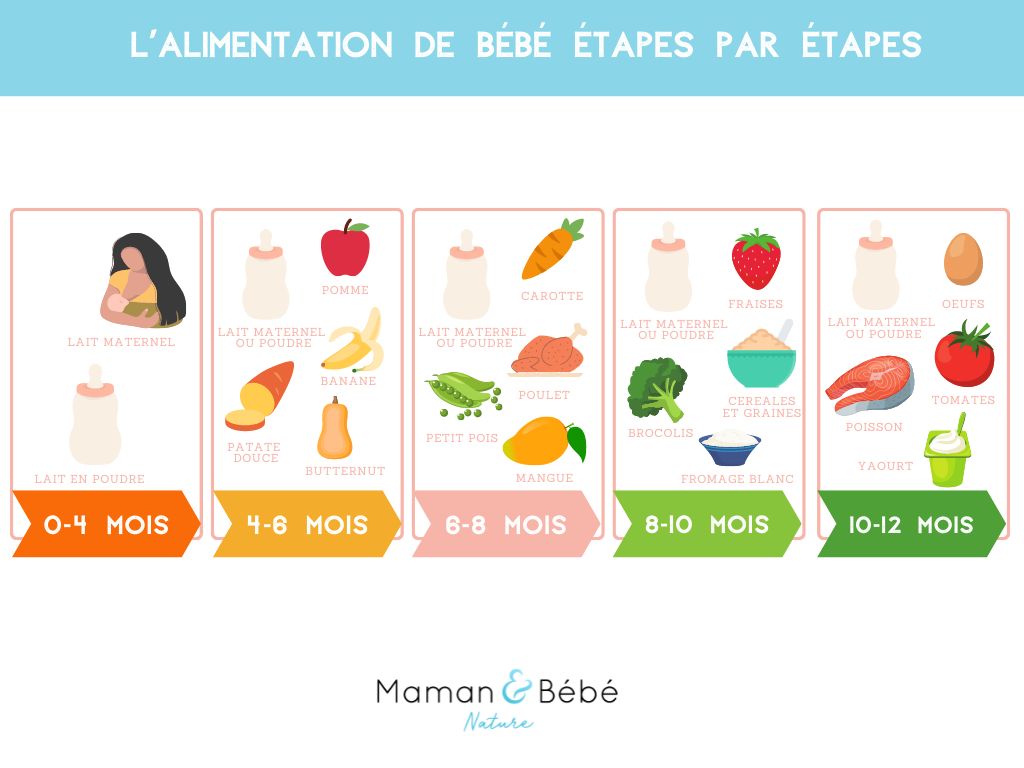
Food diversification is an exciting milestone that marks the beginning of a new culinary adventure for your baby. By introducing foods gradually, respecting their pace, and creating a positive experience around mealtimes, you are helping to build healthy eating habits from the very earliest age. You will find in our table below the food introduction chart based on your child's age. Remember that every child develops at their own pace — it is essential to remain patient and attentive to the signals they send you.
Leave your reply Cancel Reply